
Industry Insights
Big Ideas. Real Impact.
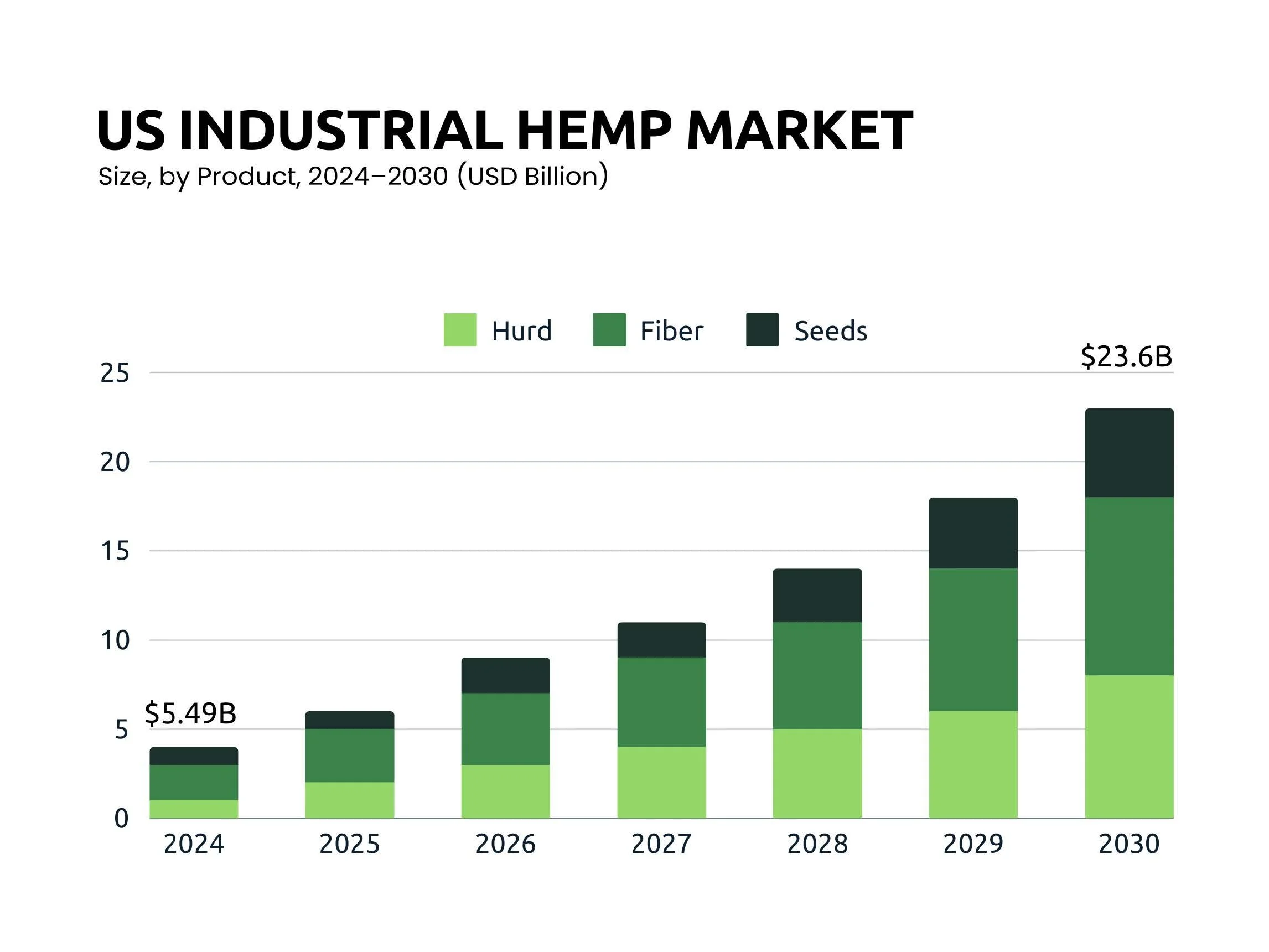
Hemp Fiber Market Growth Outlook — Structural Growth and Emerging Demand Drivers
Market forecasts indicate that the hemp fiber industry is positioned for considerable growth over the next decade, with multiple market research reports projecting multi-billion-dollar valuations and strong compound annual growth rates (CAGR) in global demand for hemp fiber and its derivatives. These projections reflect rising industrial adoption across textiles, construction, biocomposites, automotive, and sustainable consumer goods, driven by sustainability mandates, regulatory shifts, and material performance advantages.
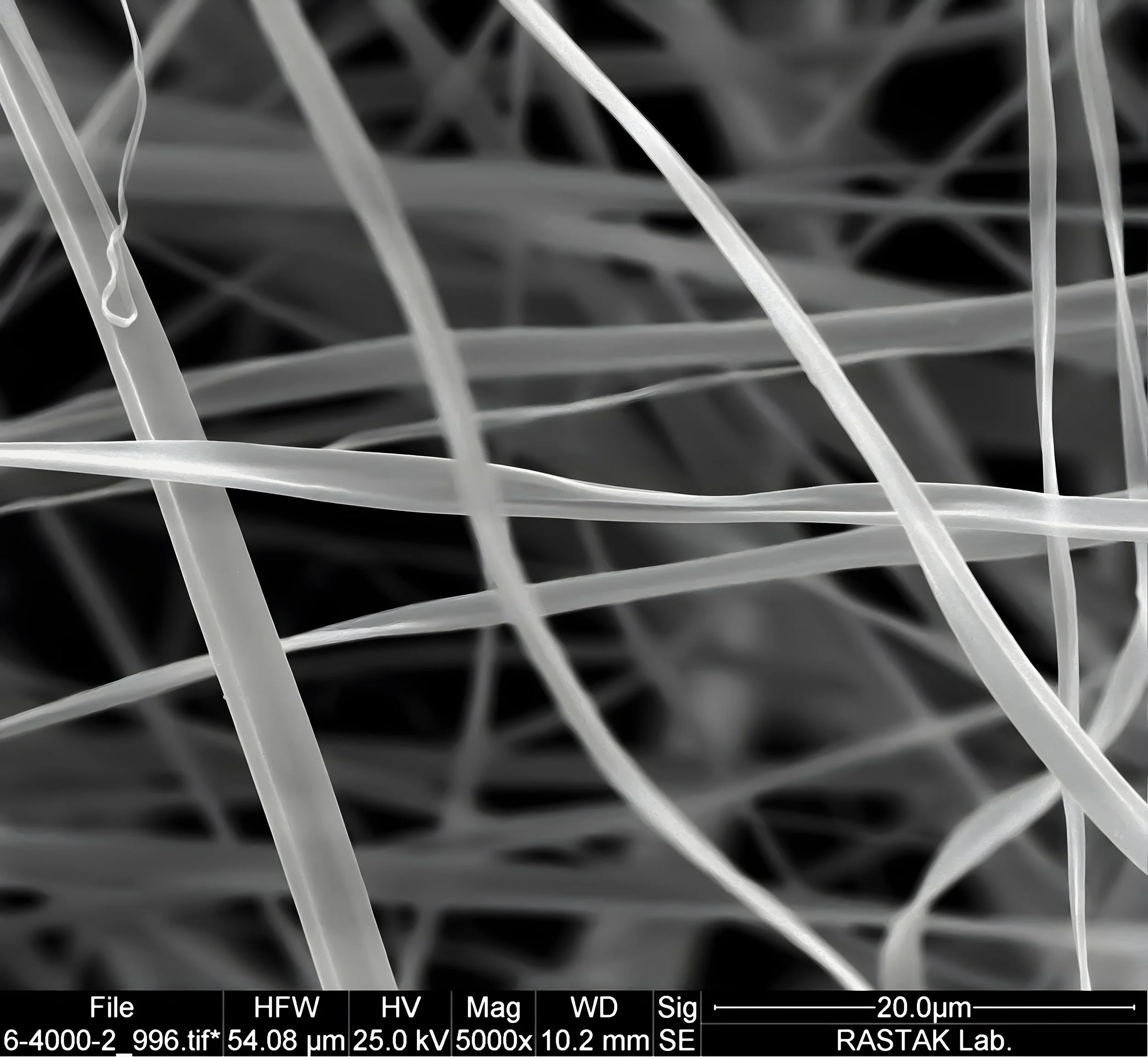
Hemp-Derived Nanocellulose — Biobased Functional Materials with Antibacterial Potential
Recent experimental research has shown that cellulose can be effectively extracted from industrial hemp fiber and transformed into carbonized nanocellulose — a nanoscale, high-surface-area cellulose derivative — which, when loaded with antibiotics, exhibits significant antibacterial activity, including strong antibiofilm performance against key pathogens. This insight highlights a new value-add stream for hemp biomass beyond traditional fiber markets, with implications for high-performance materials, biomed-related industrial technologies, and functional additive markets.

Industrializing Natural Fiber Prepregs — From Motorsport Validation to Mainstream Lightweight Markets
Developments in natural fiber composite manufacturing signal a meaningful shift: industrial-grade pre-impregnated (prepreg) materials made from renewable bast fibers — traditionally viewed as lower-performance alternatives — are being deployed in high-demand, performance-critical applications such as motorsports and specialty vehicle bodies. In particular, SGL Carbon’s production of flax fiber-based prepregs demonstrates that natural fibers can now compete with conventional carbon fiber composites on both performance and sustainability metrics.

Public Investment Accelerates Downstream Hemp Manufacturing and Carbon-Negative Materials Innovation
In January 2026, the state of New York committed $1 million to a cutting-edge hemp manufacturing laboratory at Rensselaer Polytechnic Institute (RPI), aimed at turning industrial hemp into carbon-negative building materials, textiles, packaging, and advanced composites. This investment reflects a growing governmental and industrial emphasis on decarbonizing material supply chains and closing critical gaps in downstream hemp processing infrastructure.

Hemp-Based Biodegradable Materials — From Waste Biomass to Sustainable Packaging Alternatives
Researchers at Western University in Canada have developed a biodegradable, hemp-based biomaterial that can serve as a sustainable alternative to conventional plastics used in packaging. By using ground hemp stalk powder as a filler in existing processing systems, this technology aims to reduce reliance on fossil-derived polymers and address the global microplastics crisis — carving out a novel downstream application for industrial hemp biomass.
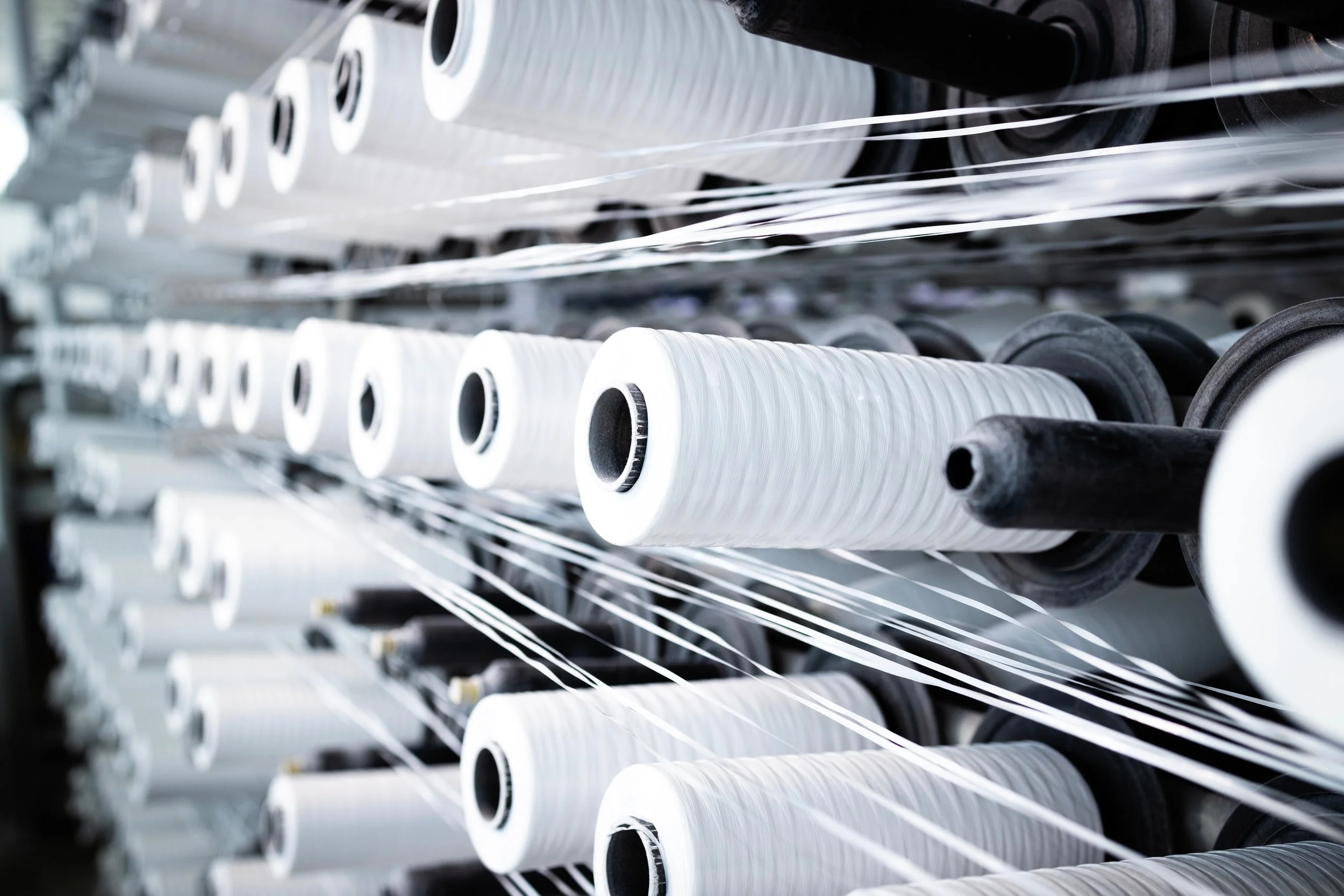
Unlocking Textile Value from Hemp By-Products Through Mechanical-Chemical Cottonization
A 2025 study published in Cellulose demonstrates that agricultural by-products from industrial hemp — previously destined for paper or composite feedstock — can be transformed into textile-grade fibers via mechanical-chemical cottonization and conventional rotor spinning, especially when blended with cotton. This research provides a practical pathway to expand hemp’s industrial utility into fine yarns and textiles by valorizing waste streams and using existing textile infrastructure, advancing both circular economy goals and sustainable materials sourcing.
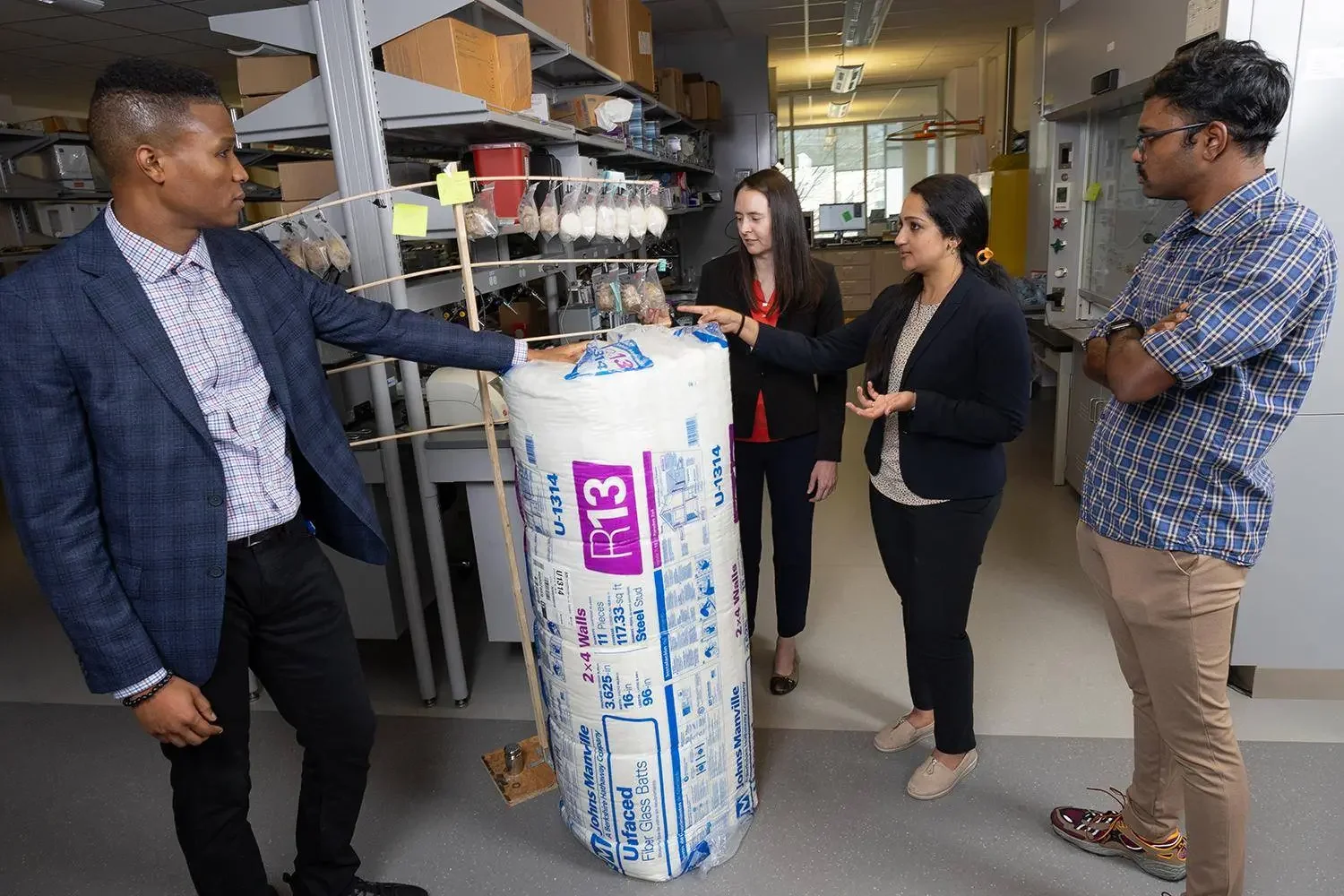
Hemp-Based Insulation — A Viable Decarbonization Strategy for the Built Environment
A 2025 analysis by researchers at Georgia Institute of Technology outlines the technical and economic potential for hemp-based building insulation to become a competitive industrial product in the United States. Their work shows that using hemp fiber as an alternative to conventional insulation materials could dramatically reduce buildings’ embodied carbon, create domestic manufacturing jobs, and help catalyze new supply chains — provided barriers like scaling, production costs, and policy support are addressed.